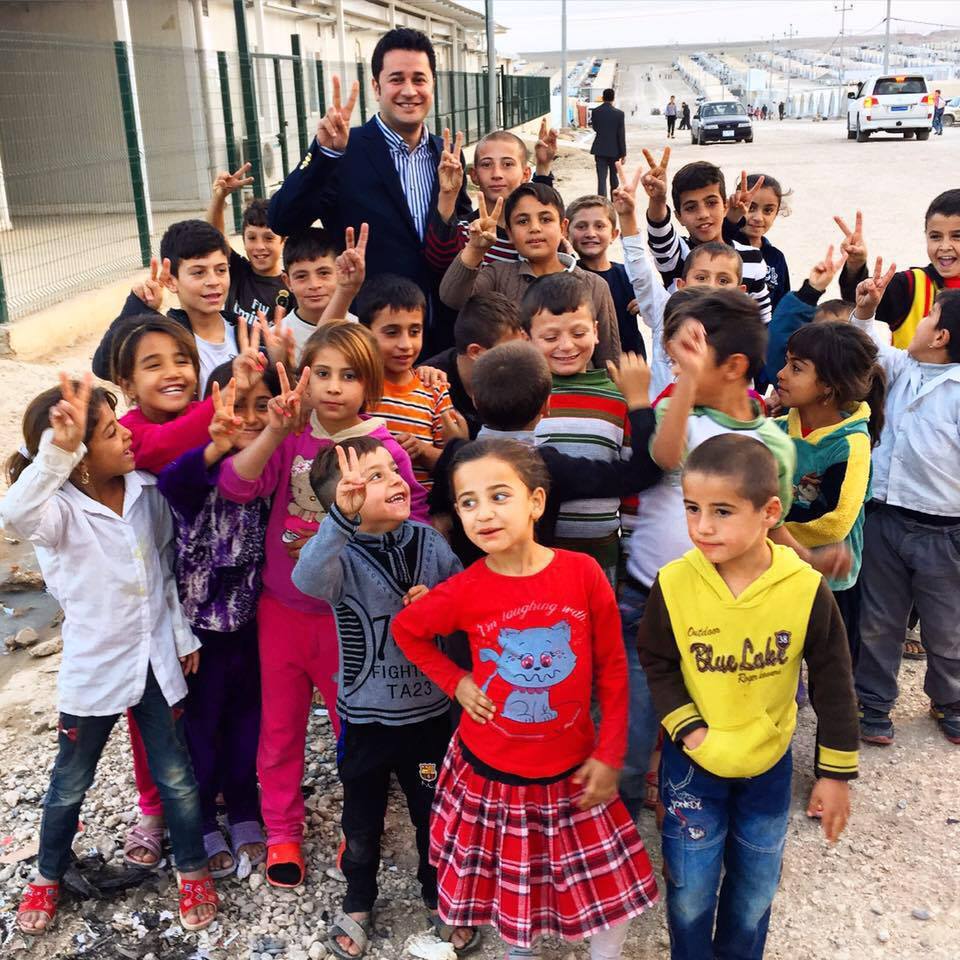
Mohammedali
Taha is a member of parliament in the autonomous region of Iraqi Kurdistan for
the Kurdistan Democratic Party, and spokesman for the KDP fraction in
parliament. This
interview was recorded in January, in Lisbon, and used in a series of articles
about the situation in Iraq published at the end of June.
Mohammedali
Taha is a member of parliament in the autonomous region of Iraqi Kurdistan for
the Kurdistan Democratic Party, and spokesman for the KDP fraction in
parliament. This
interview was recorded in January, in Lisbon, and used in a series of articles
about the situation in Iraq published at the end of June. This is
an edited transcript of the conversation, in the original English.
Mohammedali Taha é deputado do Parlamento da região autónoma do Curdistão Iraquiano pelo Partido Democrático do Curdistão e porta-voz da bancada parlamentar. Esta entrevista foi gravada em Janeiro, em Lisboa, e usada numa série de artigos sobre a situação no Iraque, publicadas no final de Junho. Esta é uma transcrição editada e no inglês original, dessa conversa.
Could you tell us about the history that has
led up to this point?
Since
1992 we have been able to run a semi-autonomous region, because before that
there was the no-fly zone status which applied to the Kurdistan region, so we
started a form of self-government. That continued until 2003 and in 2003 the US
led coalition intervened in Iraq, toppled Saddam's Ba’ath regime and after that
the Kurds of Iraq decided to be a part of the so-called democratization of
Iraq. We took part in drafting the Constitution, which included the status of
regional government within the federal Iraq, so we have that, but we were
supposed to have our rights according to the constitution that we voted for,
more than 90% of the people in the Kurdistan region voted for this
constitution, so that means they want to be a part of this so-called democratization.
But
unfortunately that never happened and we had problems with the Central
Government of Iraq since the beginning. Our budget share was supposed to be 17%
of the whole revenue of Iraq, but it never arrived, and since January 2014 they
have cut our budget share, our employees’ wages and salaries... So this
decision was taken by Iraq and it was also complemented by some threats from
the central government. The prime-minister Maliki bluntly uttered, both as PM
and as Commander in Chief of the army in Iraq – this is a threat – that they
were not sending any budget to the Kurdistan region.
So after
that we had no more choice. We are an oil rich region and we were sending all
the oil to be sold out through the Iraqi part, but they were not going to give
us our budget share. So we took our decision to sell our own oil by ourselves,
and we have some constitutional and legal basis to do so and have international
oil companies and friends who deal with us in the oil business.
But in
2014 another crisis started in Iraq, the rise of ISIS, which began in 2010, but
in 2014, after the fall of Mosul in June it brought with it many other
problems, like IDPs, the safest place in all of Iraq is Kurdistan, so all these
IDPs from the surrounding region started to head towards the Kurdistan region,
besides the fact that the budget is cut from Iraq, we are facing a wave of
about two million IDPs and at the same time already had around 300 thousand
refugees from the Syrian crisis. All the crises in these areas bring the IDPs
and refugees to Kurdistan, because it is the safest place.
And all
of a sudden the only income that we have, which is the oil revenues, the oil
prices also went down.
Yet it still seems to be one of the only stable
zones in the neighbourhood…
Fortunately
we managed to keep this stability and this security until now and I hope that
we continue. The institutions are working, but the people themselves care, they
care about the stability of the place and they cooperate with the security
institutions.
Almost 15 years after the fall of Saddam, is
there a future for Iraqi Kurdistan within Iraq, or is independence inevitable?
Well, I
would say the second. Independence has been the dream of every Kurd and it has
been the slogan of the Kurdish movements in all four parts, but the part in
Iraq had more advances since the beginning, until now, and more opportunities
to reach where we are today.
I always
give this example. We have many Kurds in the diaspora, I have cousins in the
US. They probably say they are US citizens, but originally Kurdish. And I know
people in Europe who say the same. But you will not find a single Kurd, in
Turkey, Iran, Iraq or Syria, saying they are proudly Syrian, or Iraqi or
Iranian or Turkish. They are not proud to be part of these states simply
because they do not have their basic rights.
We, as a
party in Iraq, have never been able to have our rights when we were united to
Baghdad. Before 2005, you know what happened in this region, all these
atrocities, the massacres, the genocides, the mass graves, the chemical
weapons... Everything has been tried against the people of Kurdistan by
successive governments of Iraq.
From the
Monarchy to the Republic, and to Saddam. Even after 2005 we tried our best to
tell them that we were ready to cooperate and try our best to be a part of this
democratic federation. We entered the federation after 2005, but we never had
the opportunity to get our basic rights. So it seems that to avoid any other
atrocity, to avoid other mass killings, bloodshed and conflict, another
position for Kurds is necessary.
Is this the position of your party, or is it
the position of most of the mainstream Iraqi Kurdish parties?
I would
say of most of the mainstream. Let’s talk about the election campaign, one of
their main programs is to do everything towards an independent Kurdistan. And
in the bylaws of the political parties, if you go to them, most of them are
nationalist based.
Turkey is often portrayed as being hostile to
anything related to Kurdish autonomy, anywhere... Will Ankara put pressure to
stop the independence of Iraqi Kurdistan?
The
position of Turkey has changed recently. I'd say within the past five years we
have been dealing with Turkey... A huge deal in terms of trade, and at the same
time Turkey is only dealing with the Kurdistan region when it comes to oil. We
are selling our oil using the Turkish harbours, our main route to reach the
international oil market.
The
position of Turkey regarding the autonomous Kurdish region is totally changed.
Once, in Turkey, of course, it was forbidden to say Kurd. They called them the
Turks of the mountains. And the Kurdish language was forbidden. Meanwhile they
had 20 million Kurds. Of course they are scared of having these 20 million
Kurds, and their national movement is a rebellion movement which is going on in
Turkey, that is something different, but when it comes to Iraq our leaders are
being received in Turkey with the Kurdish flag behind them. For example, our
president, when he goes to Turkey, is received as other Heads of State, the
same goes for our Prime-minister and our delegations.
Not only
that, but Turkey's position nowadays has totally changed and the main factor
behind that is the economy. There are a couple of thousand Turkish companies
working in the Kurdistan region, and that is not the case in other parts of
Iraq.
We often hear about the dream of a United
Kurdistan. How does your independence and your drawing closer to Turkey affect
this and is it even a dream still?
We have
been separated for a century. So we are now four different parts, and we have
differences, and those differences are deep. In terms of the states we are
divided between and in terms of the opportunities that the people have.
In Iraq
we are more advanced towards self-determination. But that is not the case in
other parts of Kurdistan. So we are very clear that when we speak of
independence it is the independence of Iraqi Kurdistan.
Has that led to conflicts with other Kurdish
groups? I know things are difficult between Iraqi Kurdistan and the PKK.
We have
different takes... PKK, which is nowadays considered the main political Kurdish
party which fights for the Turkish part – although they have fighters from
other parts also – but their main goal is not Kurdish independence, and they do
not even call for any Kurdish entity.
They
have different goals, which are their own, and I don't agree with them, but we
have been in conflict with the PKK. The first bullet against the Kurdish
Government in 1993 was fired by the PKK. That conflict, whether cold or warm,
is ongoing until today. And it is not over our position to declare
independence. There are many other differences, many other powers. For example,
the PKK, as a political party, is supported by some regional powers to be
against certain politics in the region.
What are your relations with Kurds from Syria
and Iran?
After
the situation in Syria – the Arab Spring and what happened in 2011 – we have a
good relation with Syria. Syria borders the Kurdistan region, when the Kurdish
administration, in the Kurdish parts of Syria started for the first time we had
two parts of Kurdistan that were administered by Kurds, sharing the same
border.
But the
situation now is different, because the PKK started taking over the situation
in Syria, and PKK does not accept any other Kurdish political power in Syria.
So as a result all these political powers are nowadays in Erbil because they
can't breathe there, they can't be there. That is why the situation nowadays
with the administration in Syria, when it comes to politics, is a bit... We
have ups and downs.
But in
terms of humanitarian aid, our region regularly provides medicine and health
facilities. We have always been open to the Syrian Kurds. There are 300
thousand Syrian refugees, most of them are Kurdish, in the Kurdistan region.
But when it comes to politics, the methods they are applying in the Syrian part
of Kurdistan, we don't really accept, we don't go with it.
And in Iran?
The
Kurdish opposition in Iran is also divided. One part goes with the ones that
are real opposition and they are in Erbil, of course. Politically they are not
accepted in Iran, and so they are in Iraqi Kurdistan. We have very good
relations with them. But another part are sister parties with PKK and they do
other stuff.
There were a few Kurdish militants who joined
ISIS, but mostly the Kurds became famous as the only force which stood up to
ISIS on the ground. That generated a lot of sympathy for the Kurds...
When
ISIS came in Iraq, in June 9th 2014, the second largest city of Iraq, Mosul was
controlled by ISIS in a couple of hours. Of course we were not expecting ISIS
to attack the Kurdistan region, because at the beginning what defined ISIS was
a Sunni/Shia conflict, because the Sunnis in Iraq feel that they are not being
included, that the Shiite majority government is not giving the Sunni
population their rights.
The
majority of the ISIS leaders were Sunni tribal leaders, that was clear. And it
was seen as part of the Sunni/Shia conflict.
And specifically a Sunni/Shia Arab conflict...
In Iraq
we have three main entities. Sunnis, Shias and Kurds. Kurds are Kurds: We have
Shia Kurds, we have Sunni Kurds, we have Christian, Yezidi, all these
differences of ideology and of religion, but they are all considered Kurds.
But when
it comes to Arabs, Sunni or Shia is the difference, their sect is the
difference. So we were considering it as a conflict between these two sectarian
groups, the two main sectarian groups.
But two
months later, when ISIS changed their war policy and began attacking Kurdistan,
we were shocked. We were not ready in terms of military and all of a sudden we
shared a border with ISIS which was more than 1.000 kilometers long. The only
thing we had were brave Peshmerga. Their rifles were from the 70's, Russian
Kalashnikovs, and their weaponry was really outdated, so we had difficult
times, but the international allies against ISIS started to see that the only
real fighters against ISIS on the ground were us and they started to support us
in terms of military training, supplying weaponry, all these things. Hopefully
we will continue to keep on defeating ISIS, and control our borders.
Previously
we have had a problem with disputed areas with the Iraqi part, and now, after
ISIS we don't have it any more, we have controlled the so-called disputed area
between Kurdistan and Iraq and we believe that they are part of the Kurdistan
region. Politically speaking, in Kurdistan region, we say there are no disputed
areas, we have controlled everything.
Baghdad might disagree...
Baghdad
does disagree, continuously, but so far that is the reality.
Before we go there, we tend to see, especially
here in the West, that the Middle East has a serious problem with radical
Islam. But it seems that Iraqi Kurdistan has seemed, so far, to avoid this
problem. So is it correct to say that this is more of an Arab problem than a
regional problem?
It is a
regional problem. The Turks, for example, are not Arabs, but radicalism is a
trend in Turkey. In the Kurdistan region the major political parties tend to be
more secular than based on religious ideology, so the form of government in the
Kurdistan region goes against the line of radicalism. And we have fought
against it, we have fought against radicalism in the Kurdistan region and we
continue to fight it. We are a Muslim majority society, and the mosques play a
huge role in this issue of radicalism. We had people that joined ISIS from the
Kurdistan region, and their main education base were mosques under the
supervision of these radical Islamists.
We still
have political parties in Parliament which are very radical, no different in
terms of the basis of their ideology from ISIS and other political parties.
You had said that the main parties are secular,
but the problem with radicalism is when it gains roots in the ground and
amongst the people. So among the Kurdish people, all over Iraqi Kurdistan, is
there much extremist influence?
Not
much, but it depends on the area. We are influenced by the geography. The areas
which border Arab fanatics, of course they are influenced. There are areas in
the Kurdistan region where people listen to ISIS radio. For a couple of months
the waves were received in those areas. Imagine that! It does influence. So it
depends on that and also the movement is not a joke... It is going on in the
region and it has its roots, but it is not that powerful in the Kurdistan
region, thankfully.
When Mosul falls, then this problem of the
disputed areas will probably rise again politically. Could it also become a
military issue between Kurdistan and Baghdad?
I hope
not, but it is very likely. Because it is not easy for Baghdad to abide by this
constitution that they helped draft.
According
to the constitution we should have a referendum in those areas no later than
December 2007. That never happened, because the Iraqi part did not allow it. We
would have loved to have it and we would love for the people of these areas to
decide their own destiny.
Will you still promote a referendum?
We are
still promoting a referendum, because we believe that the people of these
regions should decide their destiny, they should decide where to go, what to
do, how to be governed.
Is there a risk of persecution of Arab
communities which live there?
There is
a risk of that.
As a politician, is there anything the
Government of Kurdistan is trying to do to protect them and allow them to
remain there if they want to?
The main
issue of the people in those areas is security. Not only for Arabs, also for
Kurds, Christians, Turkmen, all these ethnicities, the main issue is security.
But the majority of the population in these areas, including Arabs, and perhaps
especially the Arabs, are happier with the security provided by the Kurdistan
Regional Government than by the security provided by Bagdad.
You mentioned the minorities, how might this
affect them? You say their main concern is security, do you think they will
accept and support the Kurds against Baghdad?
Well,
all those Iraqi communities, Turkmen, Christians, Assyrians, Arabs, Armenians,
Kurds, everyone from any part of Iraq, if anything happens to them they seek
refuge in Kurdistan. So I think that answers your question.
You were talking about the ethnic minorities,
but I saw you did not mention the Yezidis.
Yezidis
also...
But some Yezidis complain that they are being
called Kurds when they feel they are a distinct community.
They
have a religion, they are a religious group in Kurdistan. Their language is
Kurdish, they live in this area, it is the only religion on Earth that
practices in Kurdish, they pray to God in Kurdish, if they say they are not
Kurdish, I don't know what else to say. It's their decision... If they are not
Kurdish, fine, but they practice in Kurdish, they speak Kurdish, they're holy book
is written in Kurdish. It is the only Kurdish religion on Earth. Their basis is
religious, and it is obvious to everyone in the region. If they say they are
Arabs, or that they are Yezidis, and this is different, then they should have
some scientific basis...
In terms of Christians, I have spoken to many
over the past years and more recently I have been asking them about the
relationship with the Kurds. Most of them will say they are very grateful
because the Kurds took them in and gave them refuge and protection, but there
are also complaints and fears. Some of them say they do not forget that the
Kurds helped the Turks massacre them in 1915, in Simile in 1933, and some, more
recently, say they don't forget that the Peshmerga promised to protect their
villages, but then fled and left them there when ISIS advanced... Is it
possible to regain the trust of the Christians?
Well,
starting with the Armenian genocide, and the genocide that happened in the
areas, like Simele... At that time it was the Ottoman Empire which was
committing these genocides against them. Those who were soldiers, were forced
to serve the army in the Ottoman Empire, there was Mandatory Military Service,
some people served for up to 20 years.
But there were also civilians who took part,
they say...
They
say... But the history writers don't confirm this. I don't know, it belongs to
history, that is history and say we are a part of it? Ok. But talking about
nowadays, that their villages were destroyed by ISIS... Its war! Ok, I promise
that I will do my best to protect a village which is under the control of ISIS
and we also control parts of the village or the town, then all of a sudden the
war changes the whole situation... It is not about the promises you make. Then
ISIS takes control and starts to blow up all the buildings... The basis of that
argument is weak, I'd say.
If they
don't trust... Nobody trusts the security in that region. Every night, when we
sleep, we are very brave to sleep there. Because 20 km from the city where I
live there used to be ISIS. Nowadays it is between 50 and 60 km, it is a bit
cleaner, but nowhere in Iraq is secure. I am not trying to defend the Kurdistan
Region's position, but they should honestly look at the past 20 years, go back
and see the difference in the way they were treated by the Kurds and in the
other parts.
You were saying your city is 20 km from ISIS
front lines. Do you have any military training?
Not
really, no.
Was your father also a guerrilla in the
mountains?
My
family, the majority of them were and are military, including my sisters.
The position of women within Kurdish society is
very different from what we see in most Arabic societies around them...
Well,
again, they are influenced as well. It is different when it comes to the
openness of the Kurdish culture, it is quite open, compared to other cultures
in the region. For example, it is very well known that the Kurdish women are
also fighters, and they fight alongside with men. That is not something new for
us, it has been like this for centuries. They are better fighters, sometimes,
than men, and there are no differences there.
And
there is some other stuff... It relates to the culture, what is different in
our culture and in the culture of others in the region, because we are a
different nation.
You mentioned the instability in the whole
region, with Kurdistan trying to remain stable amongst the instability, is
there one thing necessary to bring stability to the region? Is there one factor
which is destabilizing the region?
This is
a very important question... One factor? There are many factors for
instability. But of course, not talking to each other, not coming together
around a table, not accepting each other as we are, is the main factor for
instability.
 I am asking this because many times we see...
And I have begun to think this is a regional issue, I won't say Arab, because I
get it from Christians too... They will say this is all because of Israel, all
because of America, all because of Russia... A tendency to blame others for
local problems.
I am asking this because many times we see...
And I have begun to think this is a regional issue, I won't say Arab, because I
get it from Christians too... They will say this is all because of Israel, all
because of America, all because of Russia... A tendency to blame others for
local problems.
We are
to blame. Nobody but us. Everybody is responsible for what happens to him or to
her. So we are to be blamed and if we don't find a solution for how to get
together, we should not blame anybody else.

 This is
a full transcript, in the original English, of my conversation with Yezidi activist
Mirza Dinnayi. It was recorded on the 14th of March and used
for a series of articles published a few days before the liberation of
Mosul.
This is
a full transcript, in the original English, of my conversation with Yezidi activist
Mirza Dinnayi. It was recorded on the 14th of March and used
for a series of articles published a few days before the liberation of
Mosul. So these
are people who have some sympathy for PKK, and one of the reasons why they joined
YPG or YBS is because they were the ones who, in 2014, liberated more than 150
thousand Yezidis from the Mountain when ISIS attacked the Yezidis. At that time
the Peshmerga forces collapsed, the Iraqi forces collapsed, and these people
came and saved the lives of tens of thousands of Yezidis who were surrounded in
the mountain, without food or water. So this is one of the reasons some of the
people in the area have some sympathies for these forces and joined them.
So these
are people who have some sympathy for PKK, and one of the reasons why they joined
YPG or YBS is because they were the ones who, in 2014, liberated more than 150
thousand Yezidis from the Mountain when ISIS attacked the Yezidis. At that time
the Peshmerga forces collapsed, the Iraqi forces collapsed, and these people
came and saved the lives of tens of thousands of Yezidis who were surrounded in
the mountain, without food or water. So this is one of the reasons some of the
people in the area have some sympathies for these forces and joined them.  The Kurds reserve places in their parliament
for ethnic minorities, but this does not include Yezidis. They say Yezidis are
Kurds with a different religion. What is your opinion on this?
The Kurds reserve places in their parliament
for ethnic minorities, but this does not include Yezidis. They say Yezidis are
Kurds with a different religion. What is your opinion on this?